Field report · · AgentConn Team
Claude Projects Now Run Your Code in Parallel
Claude Projects shifted from static folders to a coordinator that spawns parallel cloud sessions. What changes for developers.
Claude Projects Now Run Your Code in Parallel
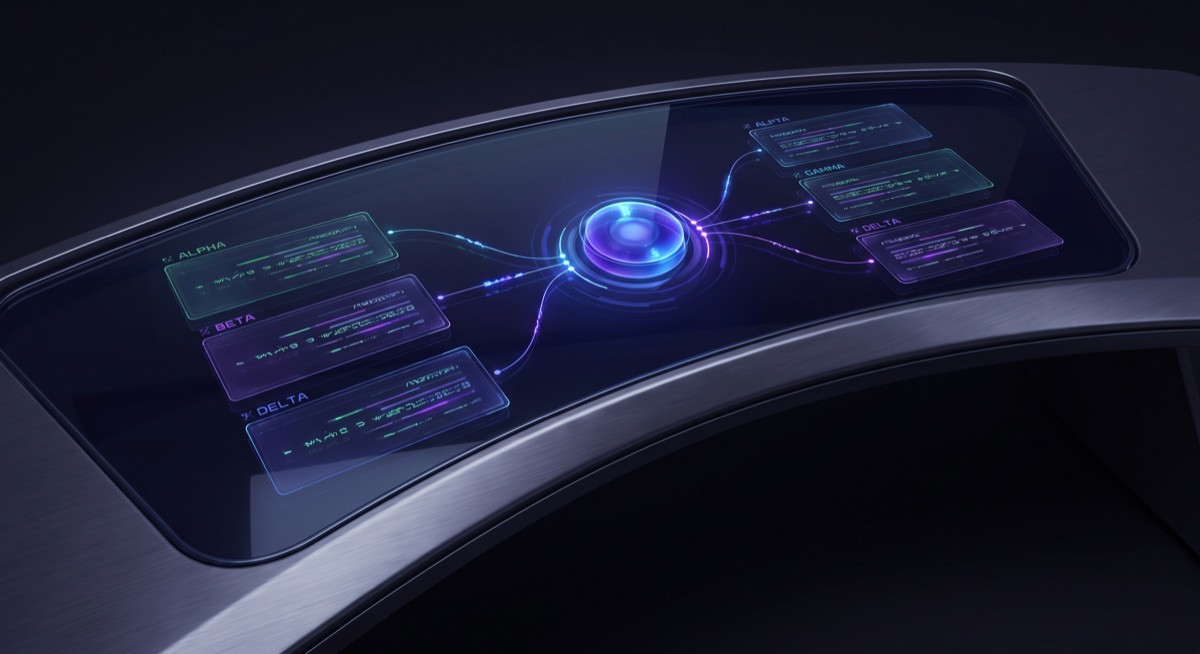
On September 17, Anthropic shipped what might be the most consequential Claude Code update since dynamic workflows: a complete redesign of Projects. What used to be a static folder — some files, some instructions, one chat — is now a conversational coordinator that autonomously spawns, directs, and assembles work across parallel cloud sessions.
Boris Cherny, the creator of Claude Code, didn’t bury the lede: “Projects are how I write a lot of my code these days. Really excited for everyone to try the new experience!”
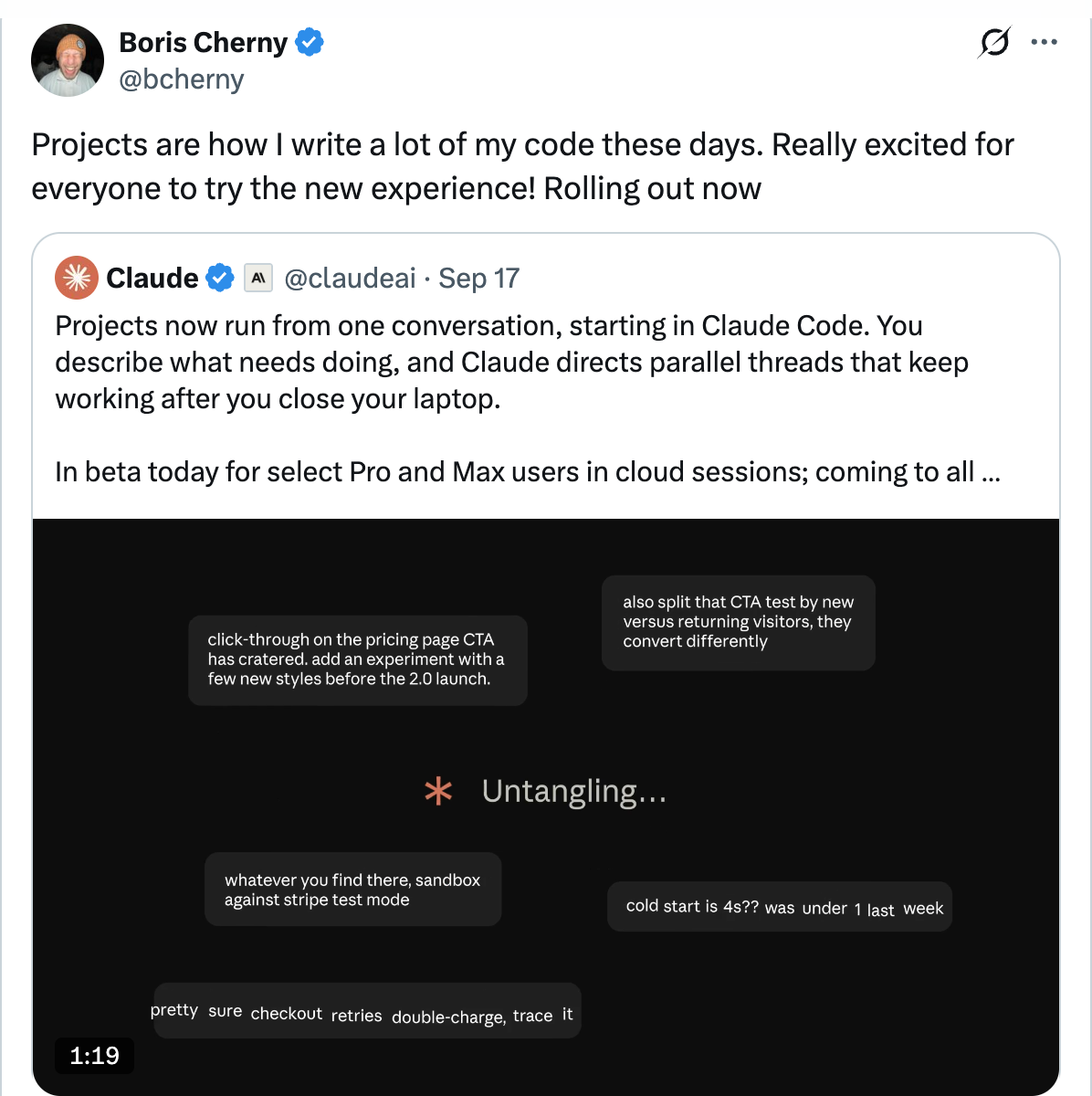
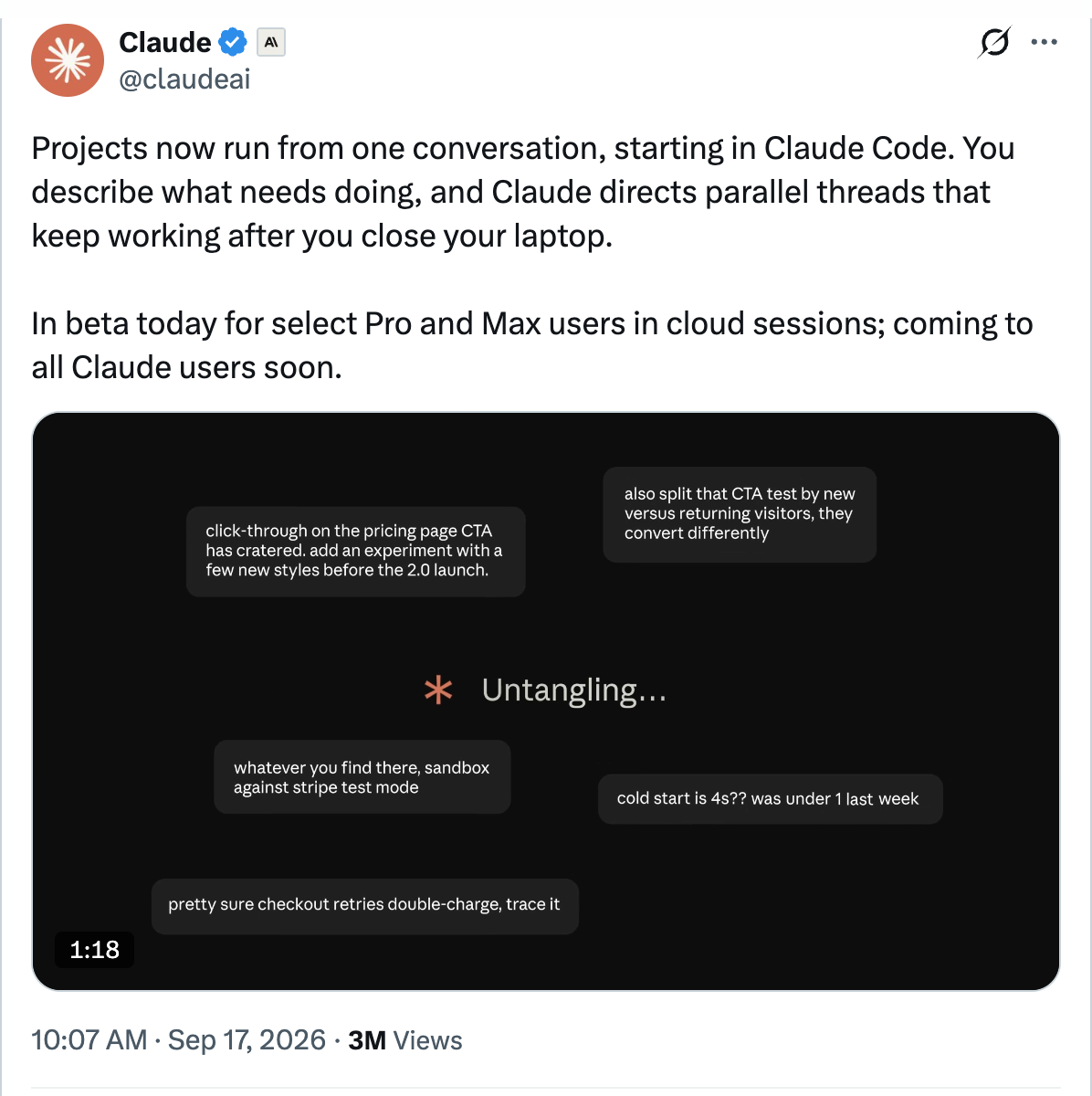
That post pulled 2,500+ likes within hours. And it landed alongside the official launch announcements from both @claudeai and @ClaudeDevs, each confirming the same thing: Projects now run from one conversation, Claude splits the work into threads, and those threads keep running after you close your laptop.
This isn’t a harness story. AgentConn has covered that angle thoroughly. This is about Claude Projects as a product feature — one that changes how developers manage sessions, context, and parallel work. Here’s what actually changed, what it means for your workflow, and where the trade-offs hide.
From Folder to Coordinator
The old Projects experience was straightforward: you created a project, uploaded reference files, wrote custom instructions, and chatted with Claude inside that context. It was useful — a step up from pasting the same system prompt into every conversation — but it was fundamentally a folder with a chat window attached.
The new Projects experience is architecturally different. VentureBeat’s coverage put it clearly: what was once a static folder has been redefined as a conversational coordinator that autonomously directs multiple agents.
Here’s how the coordinator model works:
- You describe the goal. Not a specific task, but an outcome — “reduce checkout latency by profiling endpoints and testing optimizations” or “retire these deprecated API endpoints across three repos.”
- Claude scopes the work. The coordinator breaks the goal into discrete tasks and decides what becomes a thread.
- Threads execute in parallel. Each thread is a full Claude Code cloud session running on its own branch and its own copy of the repository. Threads can spawn subagents, run workflows, and iterate independently.
- The coordinator assembles results. Merge conflicts surface as standard PRs. Dependencies are tracked. The coordinator checks in with you at configurable intervals.
The Session Management Problem This Solves
Every developer who has used Claude Code (or Codex, or Cursor, or any agentic coding tool) has hit the same wall: context doesn’t survive sessions.
You start a coding session, build up context about the codebase, make progress on a feature, hit a usage limit or a natural stopping point, and then… start over. The next session doesn’t know what you decided, what you tried, what failed, or why you chose approach A over approach B.
The industry has been patching this with various hacks:
- CLAUDE.md files — persistent instructions that load at session start
- Git worktrees — separate working copies for parallel tasks
- Manual context management — copying decisions from one session’s chat into another’s prompt
- Memory files — tracking decisions in markdown that gets fed back in
All of these work. None of them scale. And none of them let you close your laptop and come back to find the work continued.
Projects changes this by making the project, not the session, the unit of work. Sessions become disposable. Context — design decisions, architectural choices, release schedules, team preferences — accumulates automatically in shared memory and gets inherited by every new thread.
As XenoSpectrum’s technical analysis noted: “Design decisions made throughout the project, along with operational rules, are automatically remembered and accumulated.” The system learns your preferences about reporting frequency, thread spinup behavior, and detail level.
What the Architecture Actually Looks Like
The coordinator-thread model has five layers, each handling a different scope of parallelism. MarkTechPost’s technical breakdown catalogued them:
- Subagents — within a single session, for well-defined subtasks
- Agent View — unified oversight across sessions
- Agent Teams — multi-instance coordination via shared git repos
- Dynamic Workflows — script orchestration for large-scale work
- Projects — the coordinator layer that ties everything together
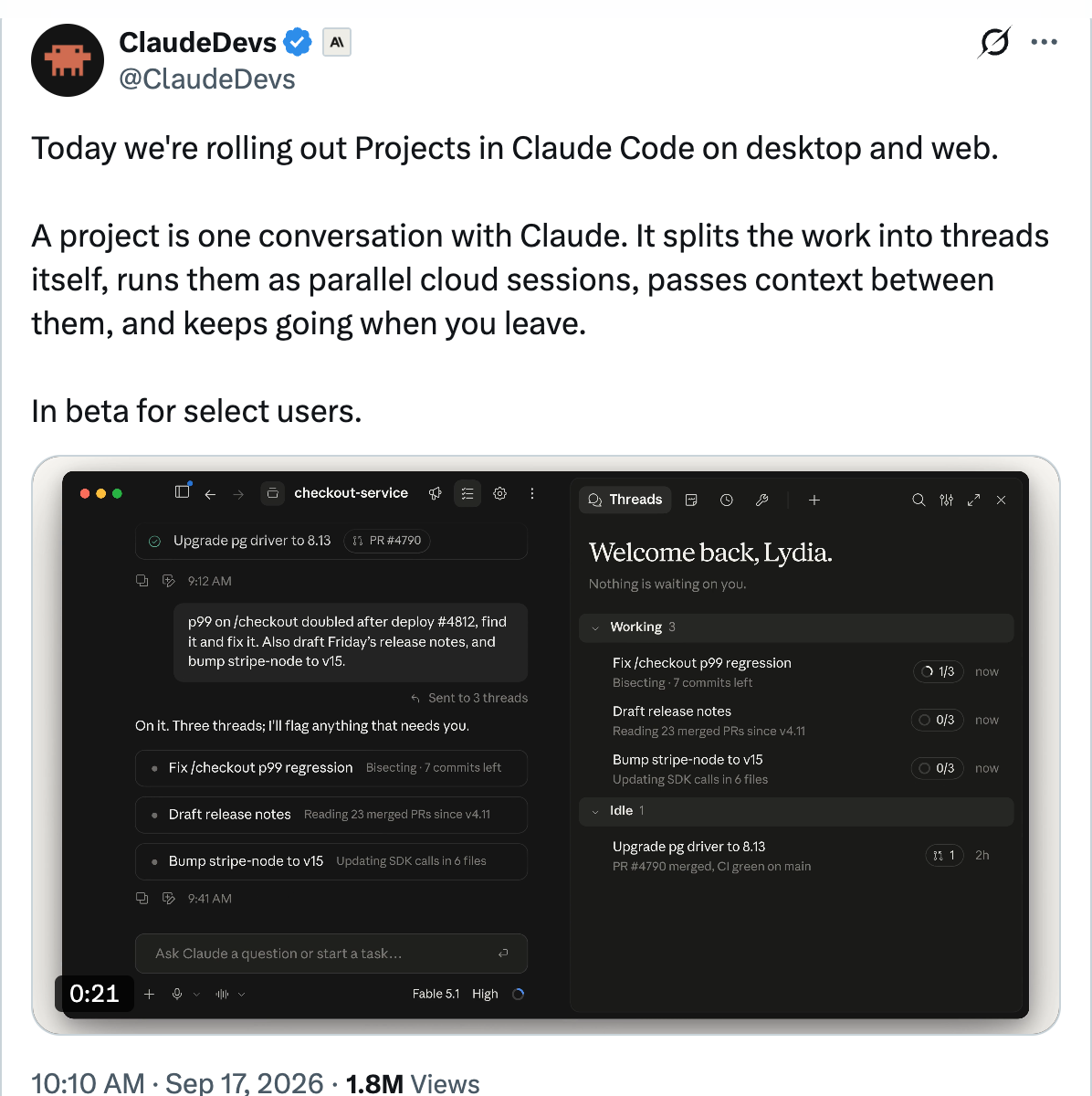
Every thread inherits the project’s repositories, uploaded files, instructions, shared MEMORY.md index, CLAUDE.md skills and plugins, and MCP tool connectors. Thread states are tracked as: Ready for review, Waiting on you, Working, Landing, Idle, or Resolved.
The oversight panel is the practical win here. You can steer progress from your phone without keeping all sessions open. Threads surface items requiring human attention — a merge conflict, a design question, a failing test — and you respond when you’re ready. The work doesn’t stop while you’re thinking.
The Billing Question Nobody’s Ignoring
Here’s where the skeptic’s lens is warranted. The Register’s headline — “work and pay in parallel” — captured what the official announcement buried in a single sentence: “Projects can reach usage limits faster.”
Each thread is a full Claude Code session. Five parallel threads means five sessions burning tokens simultaneously. Anthropic isn’t charging extra for the Projects feature itself, but the consumption model means parallel work translates directly to parallel billing.
This is the tension at the center of the redesign. Before Projects, you could parallelize for free — open multiple terminal windows, use git worktrees, run separate Claude Code instances. The context was manual, the coordination was manual, but the cost was flat. Now Anthropic handles the context and coordination, but each parallel lane has a meter running.
For enterprise teams and Max subscribers, this is probably net positive: the time saved on context management and coordination overhead justifies the faster limit consumption. For solo developers on Pro plans, the calculus is less clear.
How This Compares to Codex, Jules, and Cursor
Projects isn’t the first attempt at persistent, parallel AI coding. The competitive landscape as of September 2026:
| Feature | Claude Projects | OpenAI Codex | Google Jules | Cursor |
|---|---|---|---|---|
| Parallel sessions | Coordinator + threads | Background agents | Cloud tasks | Background agents |
| Persistent memory | Shared MEMORY.md | Per-agent | Limited | Project rules |
| Coordinator model | Explicit orchestrator | Implicit | Task-based | None |
| Merge handling | Git-native PRs | Manual | Auto-merge | Manual |
| Runs after logout | Yes | Yes | Yes | No |
The differentiator is the explicit coordinator. Codex and Jules both support asynchronous, parallel work, but they treat each agent as independent. Projects treats them as threads of a single conversation, with a coordinator that maintains coherence across all of them. Whether that coordination overhead is worth the tighter usage coupling is the bet Anthropic is making.
What the Community Is Saying
The developer response has been split along predictable lines. Power users — the ones already managing multi-session workflows with worktrees and CLAUDE.md files — see Projects as removing friction they’ve been working around. The HN discussion on organizing Claude Code for product work has been circling these pain points for months.
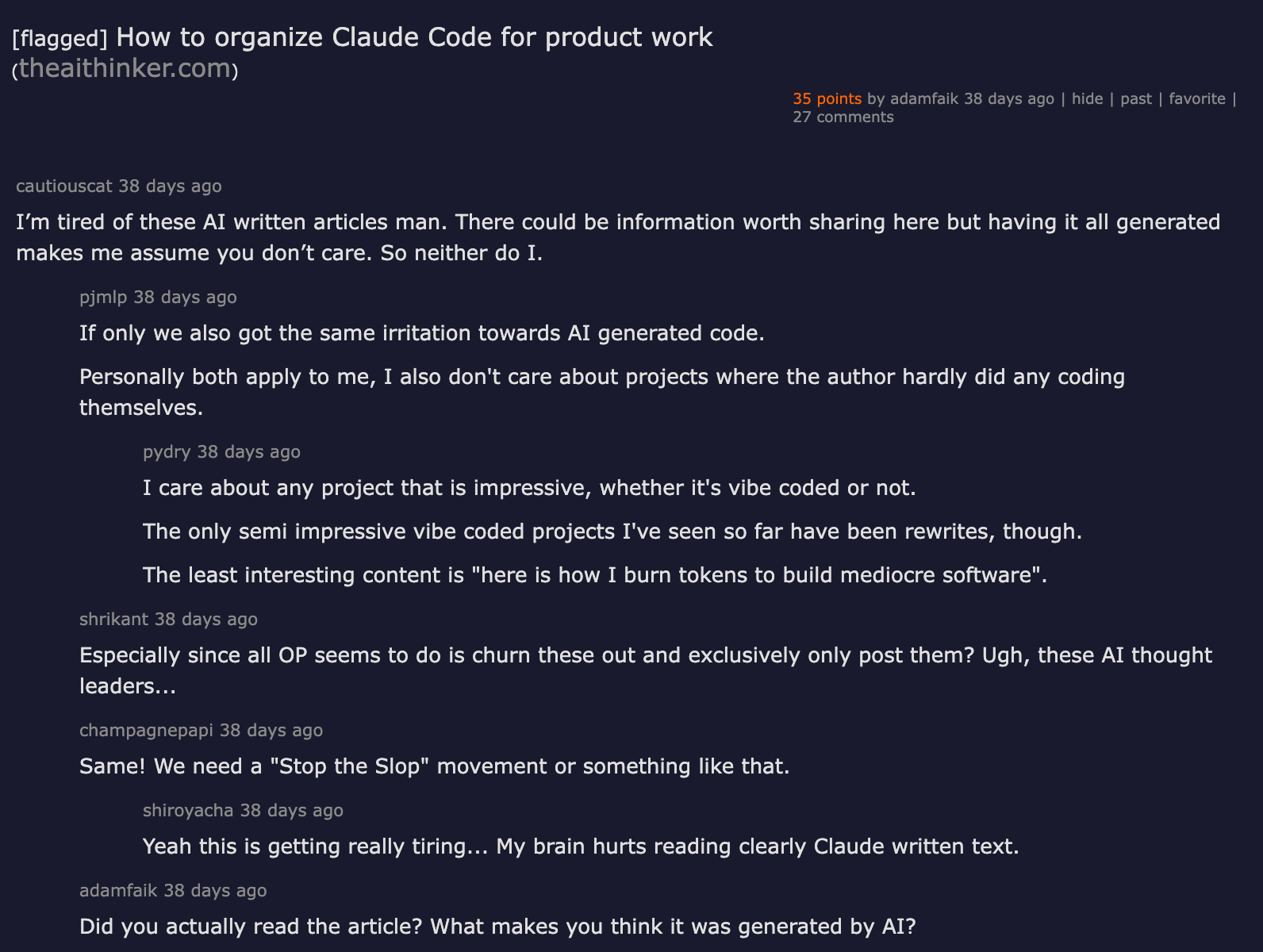
The skeptical camp raises the billing concern and a second, subtler issue: dependency. As one analyst put it, “AI coding agents reward founders who can make decisions, write clear constraints, and inspect work. They punish founders who confuse a working demo with a dependable business asset.”
Projects makes it easier to delegate more to Claude. Whether that’s a productivity gain or a crutch depends on whether the developer reviewing the output understands the code as well as they would have if they’d written it. That’s not a Projects-specific concern — it’s the central question of agentic coding in 2026 — but Projects accelerates it by making delegation feel frictionless.
The Practical Playbook
If you have access to the beta (Pro or Max subscribers with cloud sessions, expanding through September), here’s the no-nonsense setup:
Use Projects for genuinely parallel work:
- Multi-repo migrations (separate thread per repo)
- Independent feature branches that don’t touch the same files
- Test suite expansion alongside feature development
- Documentation updates running parallel to code changes
Keep single sessions for focused work:
- Debugging a specific issue
- Tight iteration on a single feature
- Code review and refactoring within one module
- Anything where context switching would hurt more than help
Invest in your CLAUDE.md and project instructions: The shared memory layer is the sleeper feature. Every decision the coordinator makes, every constraint you communicate, every preference Claude learns — it all persists and gets inherited by future threads. The developers who get the most from Projects will be the ones who treat CLAUDE.md like a living document, not a one-time setup.
What This Means for You
The redesigned Projects feature doesn’t change what Claude Code can do. It changes how you organize the work. The shift from session-based to project-based thinking is subtle but consequential:
- Context management moves from your responsibility to the tool’s. You stop worrying about “did I tell this session about the database schema change?” because shared memory carries it.
- Parallelism becomes a first-class feature, not a hack. No more juggling terminal windows and git worktrees to run multiple coding tasks simultaneously.
- The cost model shifts from time to throughput. You’re not paying for hours at the keyboard — you’re paying for the number of threads working in parallel.
For teams already deep in Claude Code, the migration path is straightforward: your existing CLAUDE.md files, worktree habits, and session management patterns translate directly into Projects’ coordinator model. The coordinator just automates what you’ve been doing manually.
For developers evaluating AI coding tools in September 2026, Projects is Anthropic’s answer to a real problem — but the billing model means the answer comes with a metering caveat that competitors don’t impose (yet). Start with the beta, watch your usage metrics, and decide whether the coordination overhead savings justify the parallel consumption.
The project is the unit of work now. Sessions are just threads.
Want deeper coverage of agent orchestration patterns? Read our breakdown of dynamic workflows and the Salesforce migration case study, or explore why the harness matters more than the model.